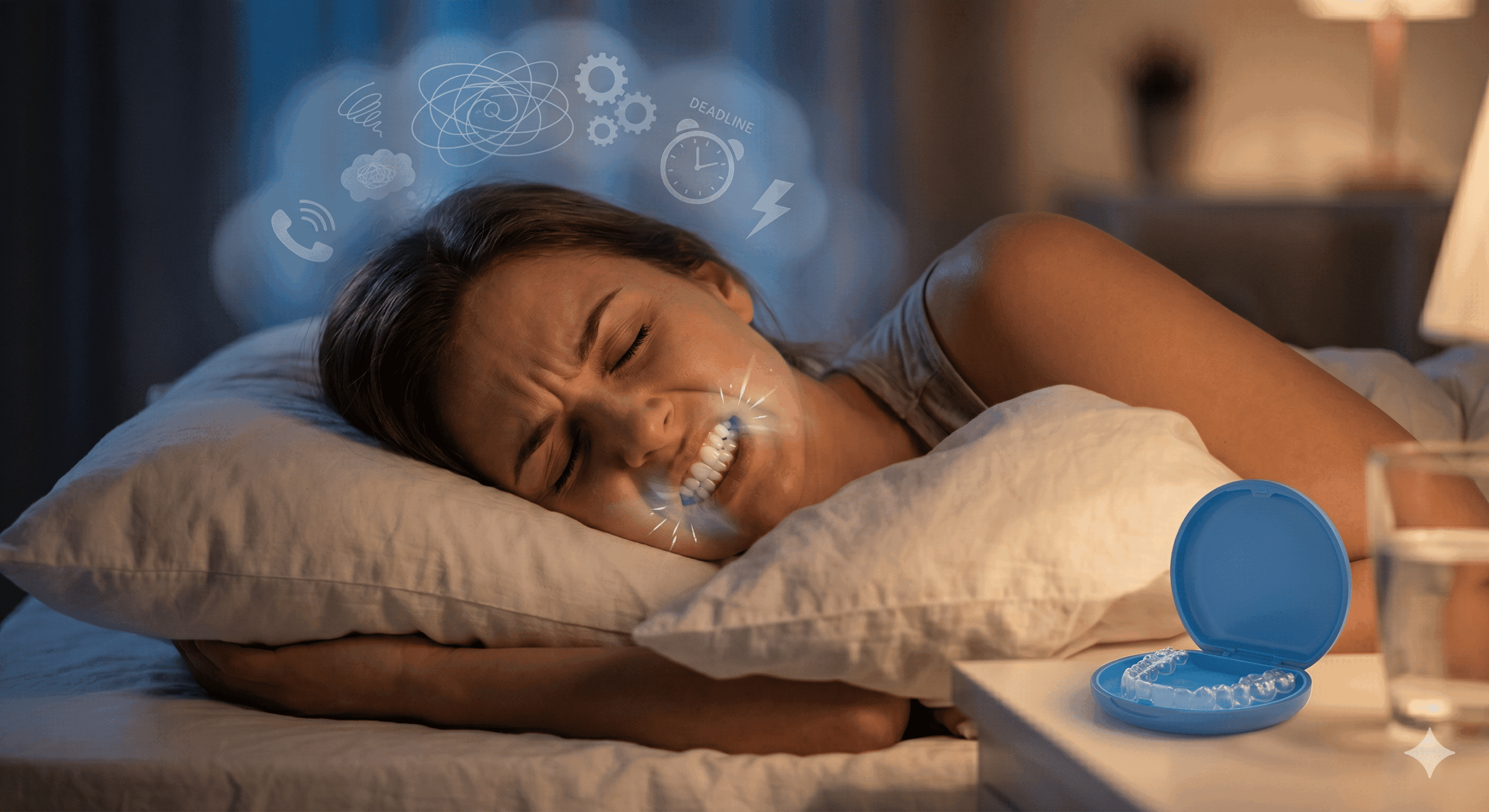
Bruxism and Stress: How We "Grind" Our Teeth at Night (And How an Orthodontist Can Help)
We live in a high-stress society. Between balancing careers, family life, and the daily commute
through the Chicago suburbs, it’s no surprise that many of us carry tension in our bodies. But did
you know that one of the most common places to store stress is right inside your mouth?
Bruxism—the medical term for unconscious teeth grinding and jaw clenching—affects millions of
adults and children. While it can happen during the day, it is most destructive at night. If you’ve
been waking up with headaches, jaw soreness, or sensitive teeth, your body might be fighting a
silent battle while you sleep. Let’s explore how stress fuels bruxism and how the expert team at
Band & Wire Orthodontics in Clarendon Hills can help you find lasting relief.
The Heavy Toll of Nighttime Grinding
The human jaw is incredibly powerful. When you chew food, your jaw exerts about 20 to 40 pounds
of force. However, when you unconsciously grind your teeth at night due to stress, that force can
skyrocket up to 250 pounds! Because your brain is asleep, the protective reflexes that normally
stop you from biting too hard are completely turned off.
This immense, repetitive pressure leads to several serious dental issues:
Enamel Wear: Your teeth literally become shorter and flatter, prematurely aging your smile.
Micro-Fractures: Tiny cracks can develop, leading to intense sensitivity to hot and cold foods.
Gum Recession: The excessive force can cause the bone around the teeth to pull back, taking
the gums with it.
TMJ Disorder: Overworked jaw muscles lead to chronic inflammation in the temporomandibular
joint, resulting in clicking, popping, and severe facial pain.
The Hidden Culprit: Your Bite Alignment
While stress is a primary trigger for bruxism, there is almost always an underlying anatomical factor
at play: malocclusion (a “bad bite”).
If you have crowded teeth, an overbite, an underbite, or a crossbite, your upper and lower jaws
don’t lock together smoothly. To compensate, your jaw muscles are forced into an unnatural
position. When you go to sleep, your brain attempts to “grind down” the high spots and interferences so the teeth can rest comfortably. Unfortunately, this physiological response results in
severe tooth destruction.
Why Standard Night Guards Aren't Enough
Most dentists will prescribe a custom acrylic night guard if they notice signs of wear. A night guard
is an excellent protective tool—it places a barrier between your upper and lower teeth, ensuring
you grind against plastic rather than precious enamel.
However, a night guard treats the symptom, not the cause. You will still clench and grind, and you
may still wake up with sore jaw muscles. To truly eliminate the problem, you need to address the
structural alignment of your bite.
How Orthodontics Provides a Lasting Solution
This is where board-certified specialists like Dr. Ramzi Daibis come in. Orthodontic treatment at
Band & Wire does more than just give you a cosmetically beautiful smile; it rehabilitates the entire
function of your mouth.
By using modern braces or Invisalign® clear aligners, an orthodontist can perfectly align your
teeth and properly position your jaw. When the upper and lower teeth fit together like gears in a
well-oiled machine, the jaw muscles can finally relax. The brain no longer senses interferences that
trigger the grinding reflex.
Pro-Tip: Invisalign is often the preferred treatment for adult bruxism patients! Not only do the clear
trays gently guide your teeth into proper alignment, but they also act as a physical cushion for your
teeth at night, serving the dual purpose of a protective guard and an active treatment.